

3 Features to Look for in Durable, Long-Lasting Kitchen Cabinets

Kitchen cabinets do more work than any other element in the room. Cabinet quality is mostly invisible once the doors are shut. Two kitchens that photograph identically can be a decade apart in how long they last, and the differences come down to three things you can check yourself in about five minutes.

Kitchen Cabinets: 1. How the Box Is Built

The box carries the weight and holds the cabinet square. Plywood sides, a full back panel, and joinery at the corners rather than staples through a butt joint are what keep a cabinet from racking over time. A racked cabinet is why doors that once lined up slowly stop lining up.

Check the back specifically. A full plywood back lets the cabinet be screwed into studs anywhere along its width. A thin panel stapled into a rebate does not, and it is a common cost saving in budget lines.

  • Plywood sides rather than particleboard
  • A full-thickness back panel
  • Corner joinery, not staples alone
  • Adjustable shelves at least 3/4 inch thick

2. Drawer Boxes and Glides

Drawers take more abuse than any other part of a kitchen. A dovetailed hardwood drawer box with full-extension undermount glides will outlive the kitchen around it. A stapled box on side-mounted rollers will start to sag and rub within a few years of ordinary use.

The test in a showroom takes seconds. Pull a drawer out fully — it should come all the way, stay level with no droop, and close without a shove. Then push down gently on the open drawer front. A good assembly barely moves.

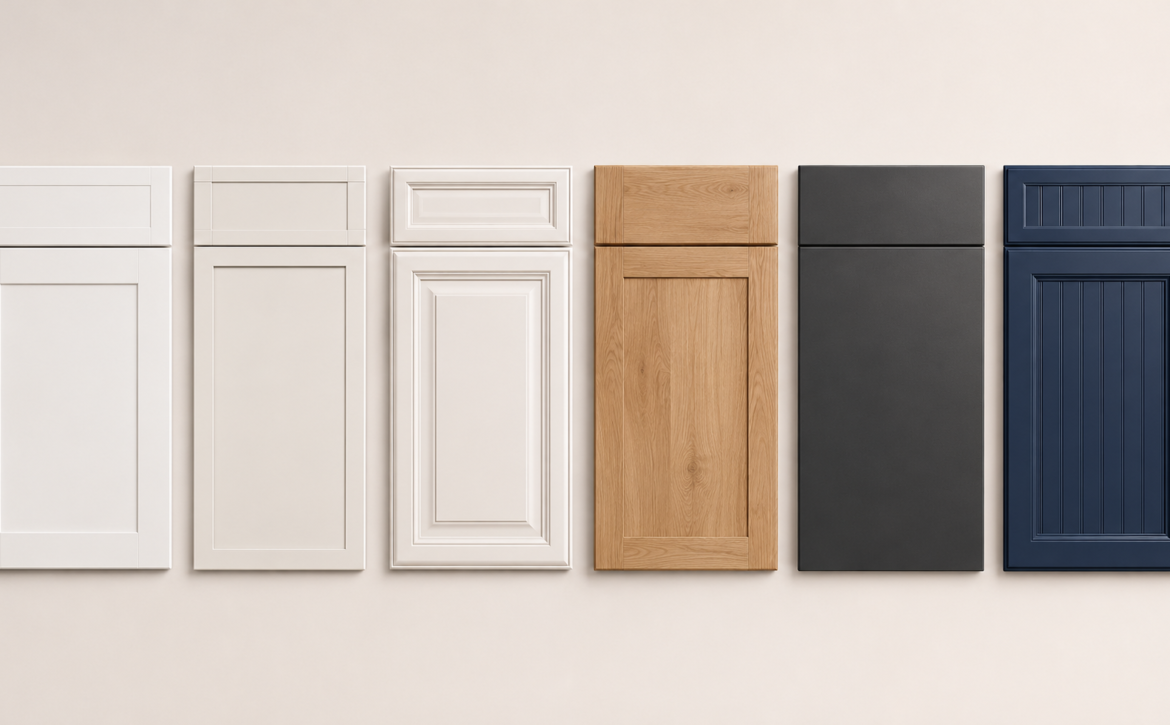
Cabinet door panel and finish detail showing construction quality
Look at the back of a door: quality lines finish every face.

3. The Finish

Finish is what fails first in a kitchen, usually around the sink and the cooktop where heat and moisture concentrate. A properly applied catalysed finish is cured rather than merely dried, which is why it resists cleaning products that would dull a lesser coating.

Look at an inside edge and the back of a door. Quality lines finish all faces, which keeps the door stable as humidity changes through the year. A door finished only on the show face is more likely to cup.

Where Semi-Custom Fits

You do not need full custom to get all three of these. Good semi-custom lines are built to the same standards as custom work and differ mainly in how much the sizing and configuration can be varied. For most kitchens that flexibility is enough, and it puts the budget into construction rather than bespoke dimensions.

Spend on the box, the drawer, and the finish. Those decide how long the kitchen lasts. Door style decides how it looks, and it costs the same whether you choose well or badly.

Checking for Yourself

Bring these three checks to any showroom, ours included. Open a drawer fully, look at the back of a door, and put a hand on an unsupported shelf. Our Danbury and Waterbury displays are set up so you can do exactly that rather than take a claim on trust.

Ready to start your cabinetry project?

Visit Kitchenique Cabinetry in Danbury or Waterbury to explore kitchen cabinets, bathroom vanities, countertops, cabinet styles, finishes, and design options for your home.
Reasons to Call Professionals to Replace Your Kitchen Cabinets

Replacing kitchen cabinets looks like a weekend of unscrewing and rehanging. It rarely is. The parts of the job that decide whether the result looks built-in or bolted-on happen before a single cabinet goes up, and most of them are hard to correct afterwards.

Kitchen Cabinets: Measuring Is Where Most Projects Go Wrong

A cabinet order is unforgiving. Boxes arrive in the sizes you specified, and if the wall is three-quarters of an inch out of square across an eight-foot run — which in most older Connecticut houses it is — that error has to be absorbed somewhere. Planned properly it disappears into a scribed filler at the end of the run. Unplanned, it shows up as a tapering gap above the countertop that nothing will hide.

Professional measuring accounts for floor slope, wall bow, ceiling variation, and the position of every stud, pipe, and vent before anything is ordered. It is unglamorous work and it is the difference between a kitchen that fits and one that almost fits.

Installation Quality Is Visible for Years

Cabinets have to be hung level to each other, not level to the floor, and shimmed so that doors and drawers align across the whole run. Doors that sit a few millimetres out of parallel are the single most common giveaway of an amateur installation, and they become more obvious over time as hinges settle.

A professional install also means the boxes are anchored into structure rather than plasterboard, drawers are adjusted after the boxes are secured rather than before, and the toe kick and crown are cut to the room instead of to the catalogue.

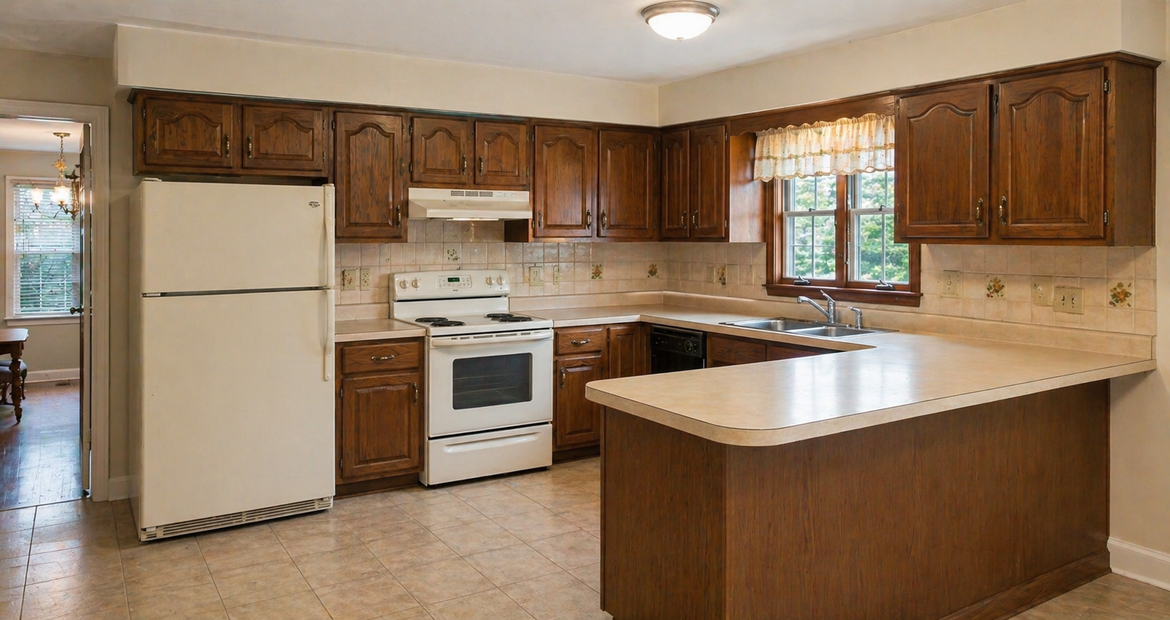
Dated oak kitchen cabinets awaiting replacement in Connecticut
Removal is when hidden damage behind the old run finally shows itself.

What Gets Discovered Behind the Old Cabinets

Taking out a run of cabinets exposes wall that has not been seen in decades. Old water damage behind a sink base, a plumbing repair that was never finished, wiring that predates current standards, or the beginnings of a pest problem all turn up at this stage. Finding them is good news; the bad outcome is sealing them back in behind new cabinetry.

Someone who does this regularly knows what to look for and what has to be resolved before the new boxes go on the wall.

Design Decisions You Only Get to Make Once

The layout is fixed the moment the order is placed. Whether the run is drawers or doors, where the pantry sits, how wide the walkway ends up, whether the dishwasher door clashes with the corner cabinet — these are cheap to change on paper and expensive to change afterwards.

This is the part of the process a showroom conversation earns its keep. You can compare cabinet ranges, see storage fittings working rather than described, and get a second opinion on a layout before it becomes permanent.

A useful test: if you cannot say why each cabinet is the size it is, the plan is not finished yet.

When Doing It Yourself Does Make Sense

Not every job needs a professional crew. Replacing doors and drawer fronts on sound boxes, swapping hardware, adding pull-out organisers to existing cabinets, or repainting a run in good condition are all reasonable projects for a capable homeowner.

The line is roughly this: if the boxes stay and the layout stays, the risk is low. Once boxes come off the wall or the layout changes, the number of things that have to be right at the same time rises sharply.

Getting a Second Opinion Before You Commit

Bring your measurements, a photograph of the room in normal daylight, and any samples you are already committed to. Our teams at the Danbury showroom and Waterbury showroom work through this daily and can tell you quickly whether a plan holds together.

You can also compare countertop options and bathroom vanities in the same visit if the project extends beyond the kitchen. We work with homeowners and contractors across the towns listed on our serving areas page.

Ready to start your cabinetry project?

Visit Kitchenique Cabinetry in Danbury or Waterbury to explore kitchen cabinets, bathroom vanities, countertops, cabinet styles, finishes, and design options for your home.